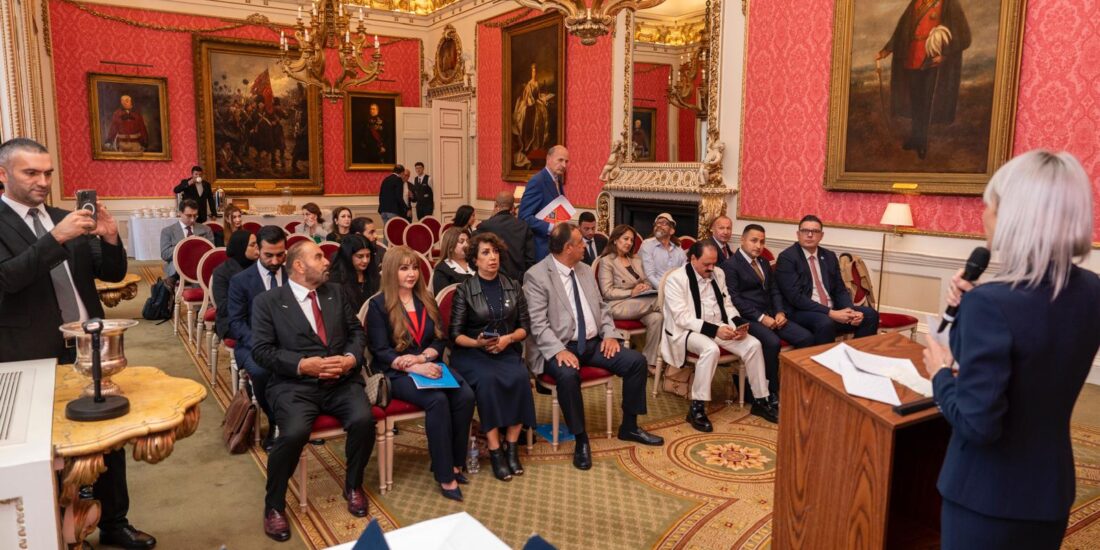
HISTORIC GATHERING IN MOSCOW: HALİL SERT AND SERHAT AKPINAR ON THE SAME PLATFORM WITH REPRESENTATIVES FROM 154 COUNTRIES
Held under the theme “A New World: The Values That Unite Us,” the Second World Public Assembly brought together 5,528 people from 154 countries in Moscow. The summit addressed diplomacy, education, science, culture, youth, artificial intelligence and international humanitarian cooperation, while Mgr. Halil Sert, Vice President of DMW Diplomats International, and Serhat Akpınar, President of DMW Diplomats International Cyprus, drew attention through their international engagements.
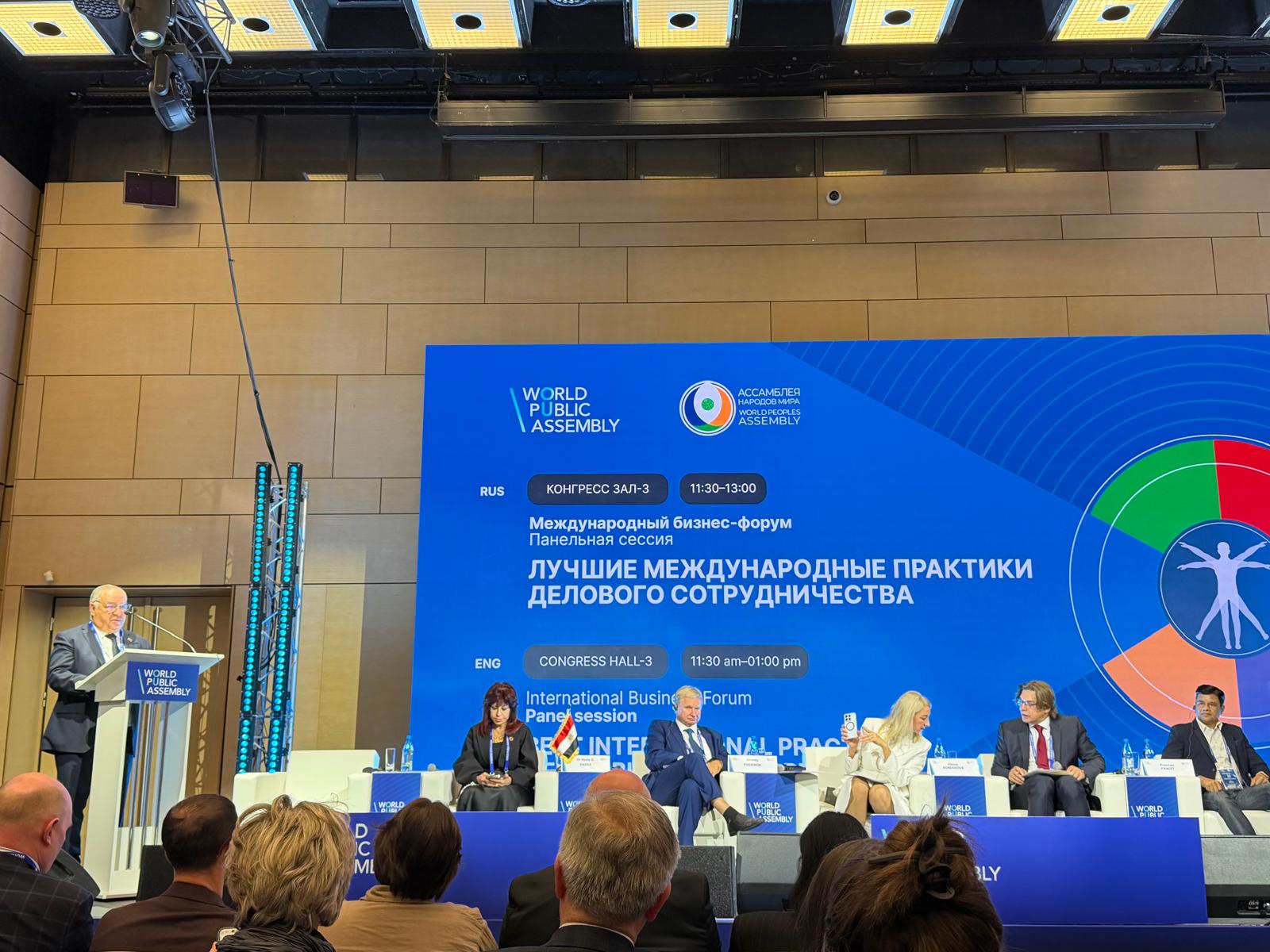
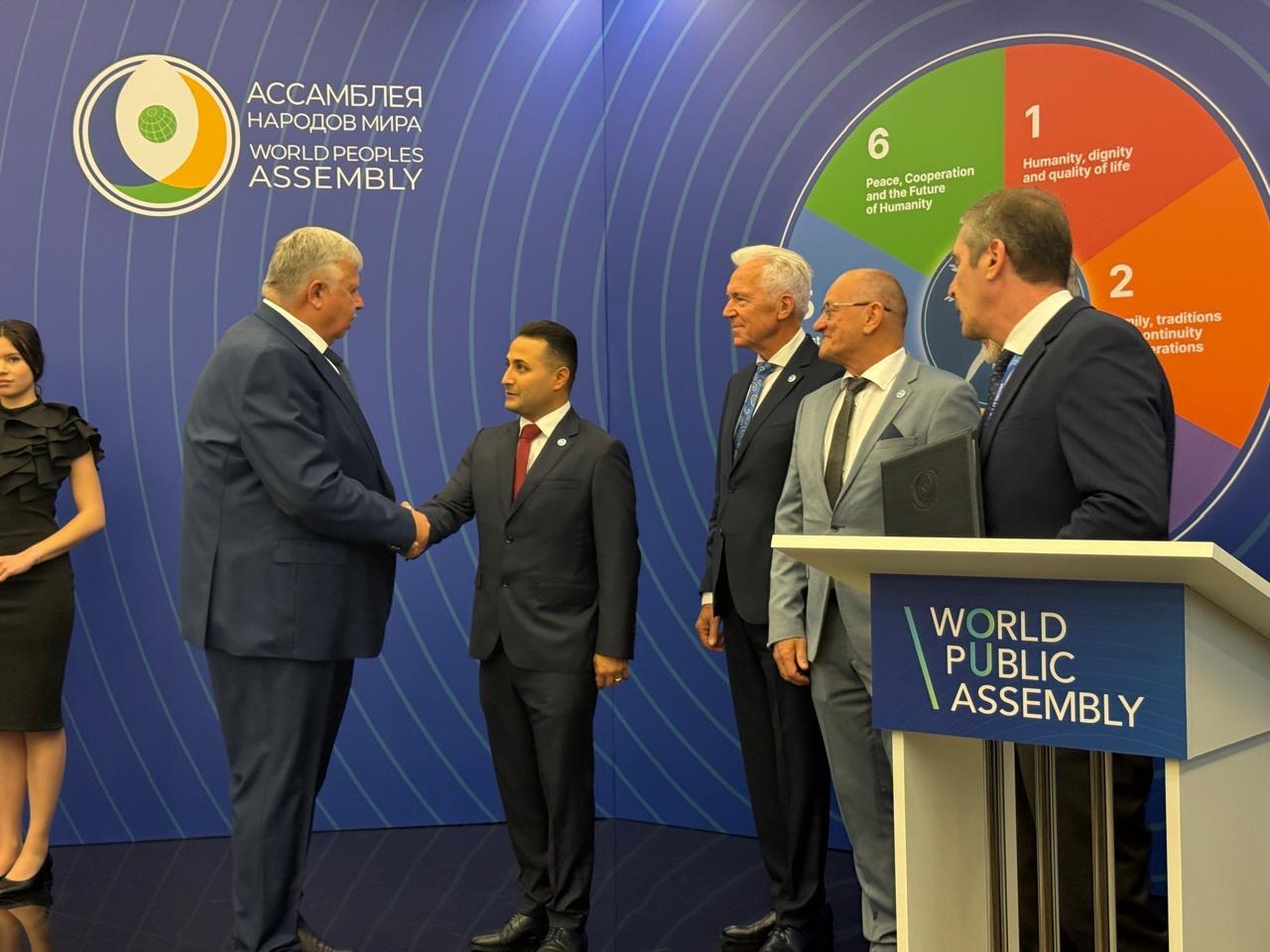
MOSCOW – The Second World Public Assembly, which brought together representatives from different fields of global public diplomacy, was held on 18–19 September 2026 at the World Trade Center Moscow.
Held under the title “A New World: The Values That Unite Us,” the international gathering registered 5,528 participants from 154 countries. Following the first meeting in 2025, which brought together more than 5,000 participants from 153 countries, the World Public Assembly continued its international public diplomacy gathering with an even broader participation.
The main objective of the meeting, organized by the World Peoples Assembly, was to discuss common values that can strengthen trust among societies, develop international humanitarian cooperation, and address a vision for the future based on mutual respect, partnership and shared responsibility.
DIFFERENT VOICES FROM 154 COUNTRIES ON THE SAME PLATFORM
The Moscow meeting brought together public diplomacy representatives, as well as diplomats, parliamentarians, academics, journalists, non-governmental organizations, representatives of the business world, education and cultural circles, youth organizations and international experts on the same platform.
The international panel of experts included Canadian journalist and political analyst Matthew Ehret, American University professor and founder of the Institute for Nuclear Studies Peter Kuznick from the United States, Cuban Academy of Sciences academic and Havana University professor Fidel Antonio Castro-Smirnov, France–Russia relations expert and former adviser to French President Jacques Chirac Hélène Perroux, and former South African Minister of International Relations and Cooperation Lindiwe Sisulu.
The programme also featured figures from different fields, including Mohamed El-Orabi from Egypt, British television presenter John Warren, former President of South Yemen Ali Nasser Muhammad, Sameep Shastri from India, Secretary-General of the Association of Arab Universities Amr Ezzat Salama, and Chinese director Pan Zhiqi.
This broad participation demonstrated that the meeting was designed as a multi-stakeholder public diplomacy platform extending beyond diplomatic circles to include academia, media, youth, culture, science and the business world.

A BROAD AGENDA EXTENDING FROM DIPLOMACY TO ARTIFICIAL INTELLIGENCE
The two-day programme addressed international relations and public diplomacy alongside education, science, artificial intelligence, youth, culture, sports, media, innovation and humanitarian cooperation.
The programme included discussions on developing international education and scientific partnerships, modern educational technologies, the future of human capital, the participation of young people in international processes, and the impact of artificial intelligence on individuals and society. Meetings, press briefings, interviews, agreement signings, exhibitions, as well as youth, business and cultural events were also held as part of the programme.
Prior to the main meeting, the international media forum entitled “Media in the Service of Humanity” was also held. The forum discussed the social responsibility of journalism, the impact of artificial intelligence on the media, international media cooperation and the role of the media in shaping a vision for a common future.
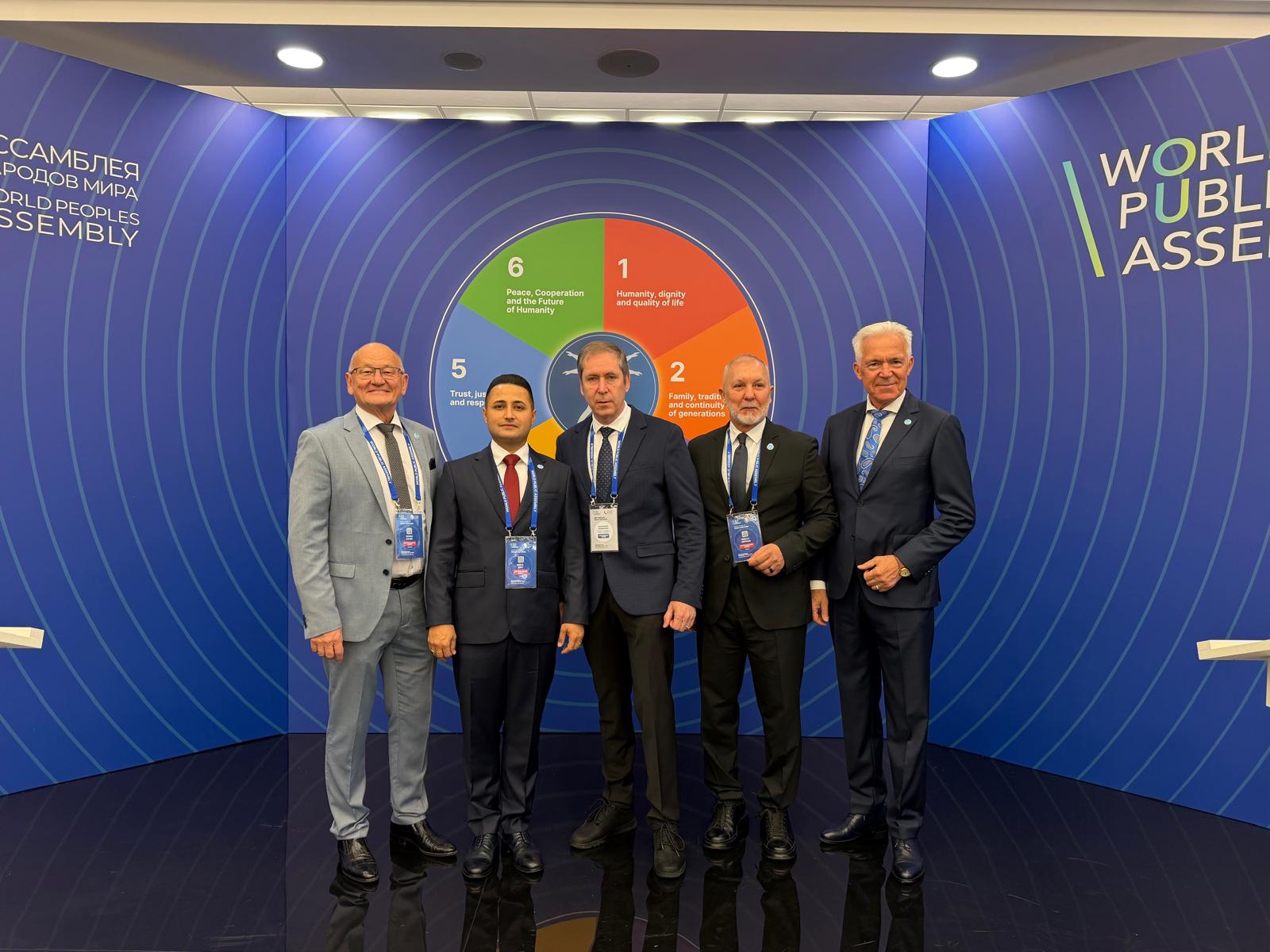
SERHAT AKPINAR EMPHASISES SPORTS AND DIPLOMACY
Serhat Akpınar, President of DMW Diplomats International Cyprus, also took an active part in the Moscow gathering.
Akpınar participated as a speaker in the panel entitled “Sports and Diplomacy in the Service of the Peoples of the World,” while also holding meetings with World Peoples Assembly Secretary-General Andrey Belyaninov and Deputy Secretary-General Aleksandr Rabinovich.
One of the important aspects of Akpınar’s contacts in Moscow was the international visibility of Turkish Cypriot youth. During his meetings with representatives from different countries, Akpınar stated that he had raised what he described as restrictions faced by Turkish Cypriot young people in the fields of sports, education, arts and culture.
In his remarks during the panel, Akpınar expressed the view that political disputes should not affect the opportunities available to children and young people in education, sports, arts and culture, and argued that Turkish Cypriot youth should gain greater visibility on international platforms. He also stated that he expected these contacts to develop into academic, diplomatic, cultural and institutional cooperation in the future.
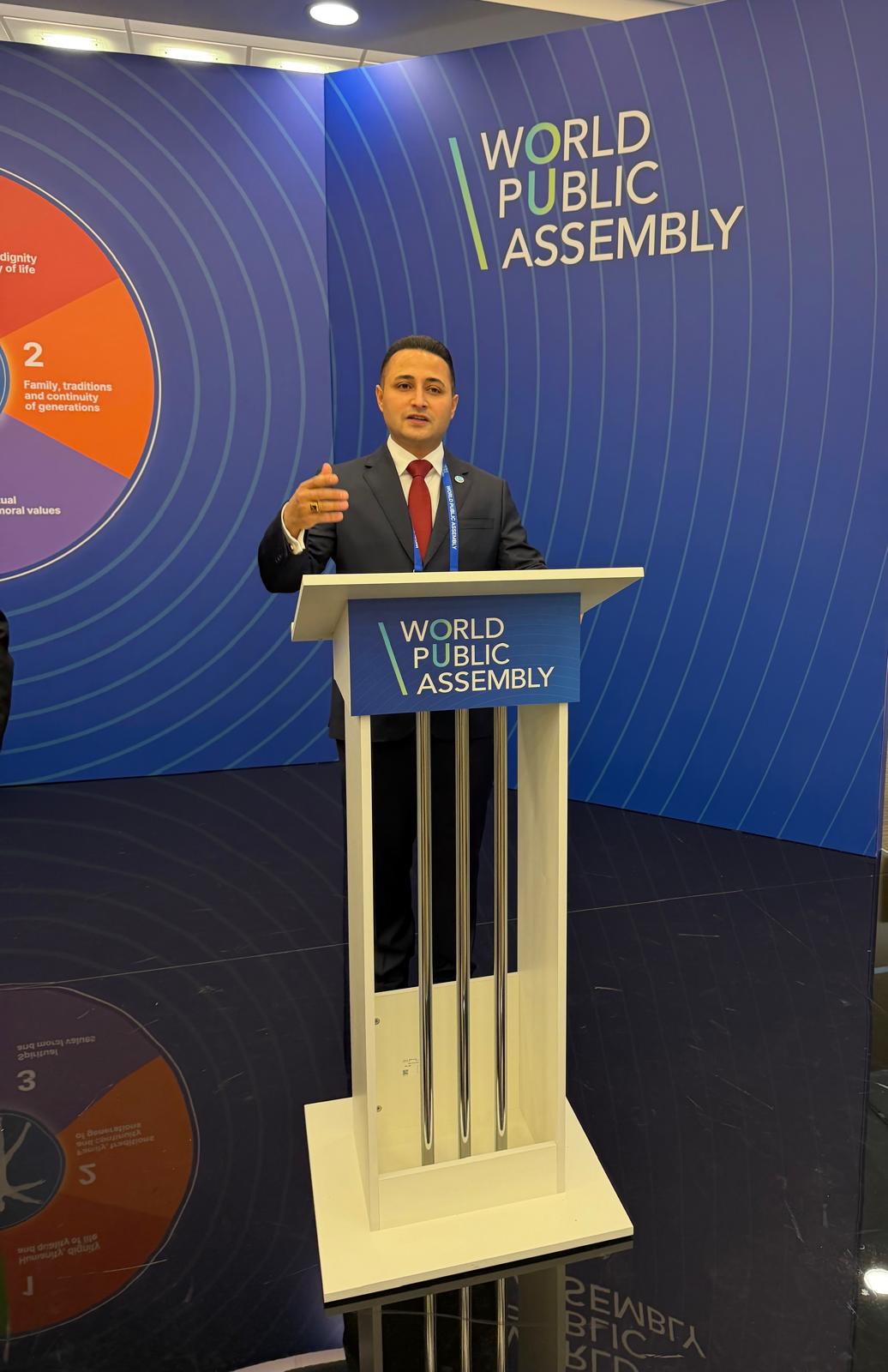
HALİL SERT: INTERNATIONAL DIPLOMATIC EXPERIENCE EXTENDING TO MOSCOW
Mgr. Halil Sert, Vice President of DMW Diplomats International, was also among the figures representing DMW’s diplomatic work at the international gathering in Moscow.
According to the current management structure of DMW Diplomats International, Halil Sert serves as Vice President. In the same management structure, Serhat Akpınar serves as President of DMW Diplomats International Cyprus. In addition to its Geneva headquarters, the organisation has representations in Cyprus, Türkiye, Singapore and the United States.
One of the factors that gives meaning to Sert’s role in Moscow is his previous work in the field of international diplomacy.
According to DMW’s official records, Halil Sert took part in DMW’s election observation mission during the Venezuelan presidential elections of 28 July 2024. DMW states that, following its appointment as an election observer by the United Nations, Sert was sent to Venezuela to observe the electoral process on the ground and conduct field assessments.
Another of Sert’s international engagements was a meeting held at the United Nations in Geneva on 26 June 2024. According to DMW, the organisation brought to the attention of 115 countries the role of diplomatic understanding in initiating peace, while Halil Sert represented DMW’s views. The meeting also addressed the visibility and social participation of people experiencing difficulties in accessing opportunities within society.
Sert’s presence in Moscow can therefore be considered not merely as participation in an international meeting, but as a continuation of the work of DMW Diplomats International in the fields of diplomacy, humanitarian cooperation and communication among societies.
“BOUNDLESS DIPLOMACY”: FROM DIALOGUE TO PARTNERSHIP
DMW International’s approach to diplomacy also provides a framework that corresponds with the multi-stakeholder structure of the Moscow meeting.
Within the organisation’s approach, diplomacy is not viewed solely in terms of political relations between states; education, the economy, communication, social development and international cooperation are also regarded as complementary elements of diplomatic dialogue. DMW states that it develops projects in harmony with European Union initiatives in the fields of education, economy and communication, and is also involved in social development projects.
Within this approach, universities, researchers, students, young scientists, non-governmental organisations, the business world and cultural circles emerge as important actors in strengthening communication among societies.
For this reason, the concept of “boundless diplomacy” refers to extending diplomacy beyond political negotiation tables into a broader field of communication encompassing education, science, culture, youth, media and human relations.
YOUNG PEOPLE AND NEW TECHNOLOGIES
The Second International Youth Forum, “Generation of Unity,” held as part of the World Public Assembly, constituted one of the important sections of the meeting.
The participation of young people in international decision-making processes, the future of public diplomacy, the impact of artificial intelligence on society and the rapidly changing digital communication environment were among the main topics on the youth agenda.
These discussions provided a framework demonstrating that artificial intelligence and digital technologies should not be considered solely as technological developments, but also in terms of education, communication, access to information, social trust and the future of young people.

A SEARCH FOR THE FUTURE THROUGH COMMON VALUES
One of the most notable outcomes of the World Public Assembly was the assessment of responses to a question on common values addressed to participants prior to the meeting.
According to data announced by the organisers, 1,023 detailed responses from 97 countries were analysed. Among the values most frequently mentioned by participants as capable of bringing humanity together in the future were peace and non-violence, dialogue and mutual understanding, respect and human dignity, cultural diversity, compassion and empathy, unity and solidarity, cooperation and partnership, and responsibility towards future generations.
In line with these assessments, the World Public Assembly plans to prepare a “New World Values Charter” as one of the outcomes of the gathering.

THE NEW ACTORS OF DIPLOMACY IN MOSCOW
The World Public Assembly, held in Moscow on 18–19 September, brought together representatives from different countries not only around political and diplomatic agendas, but also around science, education, culture, youth, sports, media, technology and humanitarian cooperation.
With 5,528 registered participants from 154 countries, the meeting concluded as an international gathering demonstrating the increasingly broad network of actors through which public diplomacy is conducted today.
Within this framework, the World Public Assembly emerged as a platform where, alongside intergovernmental diplomacy, academics, young people, journalists, civil society, representatives of culture and the arts, the business world and public diplomacy actors all form part of international dialogue.
The picture that emerged in Moscow once again brought into focus the idea that diplomacy is not merely a form of negotiation conducted between states, but a multidimensional field of communication aimed at enabling people, institutions and societies to understand one another.